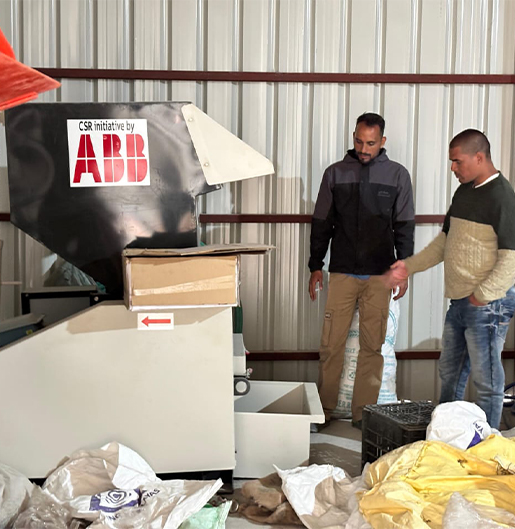
At the core of our work is strengthening circular waste management infrastructure across the Himalayas, building systems that can operate in harsh, high-altitude terrain while ensuring long-term environmental resilience. Since 2021, when we built our first Material Recovery Facility (MRF) in Rackcham, Kinnaur, we have expanded to a network of nine fully functional MRFs across Himachal Pradesh and Uttarakhand.
These facilities are strategically located in high-tourism, remote regions: Narkanda, Powari, Rackcham, Pooh, Tabo, Koksar, Mansari, Barshaini, and now Kedarnath, where India's first high-altitude MRF at the temple summit manages seasonal pilgrimage waste.
We have also enabled door-to-door collection systems in 50+ villages, achieving 90–95% source segregation, and together these systems now manage over 1740 tonnes of waste. These MRFs are equipped with essential machinery and supported by digitised data tracking for transparency and accountability.
This expanding infrastructure forms the backbone of a scalable, community-led circular waste model for mountain regions.
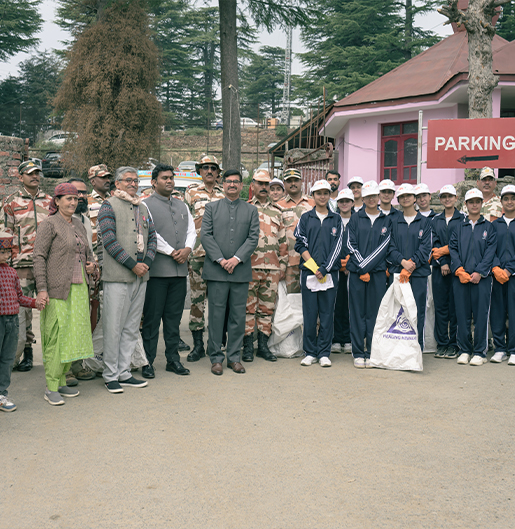
We are transforming how Himalayan communities and travellers relate to the mountains, shifting waste responsibility from an individual act to a shared culture of stewardship.
Our behaviour-change programs now reach 8,757+ households and 2,900+ commercial establishments across 50+ villages, while indirectly influencing 40 lakh+ tourists who visit Himachal and Uttarakhand each year. With 1,000+ clean-up campaigns covering 10,000 km and supported by 4,000+ volunteers, we are embedding responsible tourism and accountability across high-altitude communities.
By working closely with schools, mahila mandals, youth groups, and panchayats, we run IEC sessions, clean-ups, and hands-on activities that inspire residents to become Green Warriors of their own regions, championing segregation, reducing waste, and protecting their ecosystems. This growing movement is turning collective responsibility into a powerful force for a cleaner, resilient Himalaya.
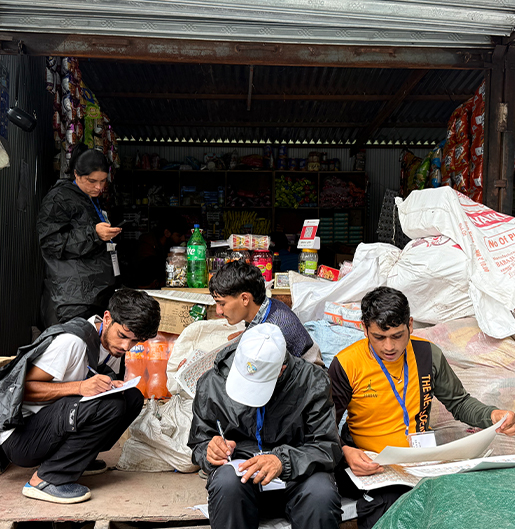
We collaborate with communities, local authorities, and government bodies to reimagine waste governance that truly fits Himalayan realities. By supporting the development of circular economy frameworks, trek-route management guidelines, and village-level waste protocols, we help embed sustainability into the daily functioning of mountain regions.
One key example is our support to the Himachal Pradesh administration in piloting the Digital Refund Scheme (DRS) during the Manimahesh Yatra 2025, in partnership with Recykal. The pilot demonstrated the potential of digital circularity at scale, with 3.03 lakh QR codes distributed, 2.99 lakh claims processed, and participation from 185 shops and 25 langars.
At the local level, we work closely with panchayats and district administrations to draft and operationalize waste bylaws, user-fee systems, and decentralized waste governance structures. These efforts strengthen accountability, improve collection and segregation, and create long-term foundations for circular waste systems in high-altitude regions.
Through these collaborations, we help shape policies that make sustainability not an exception, but a built-in part of mountain life.
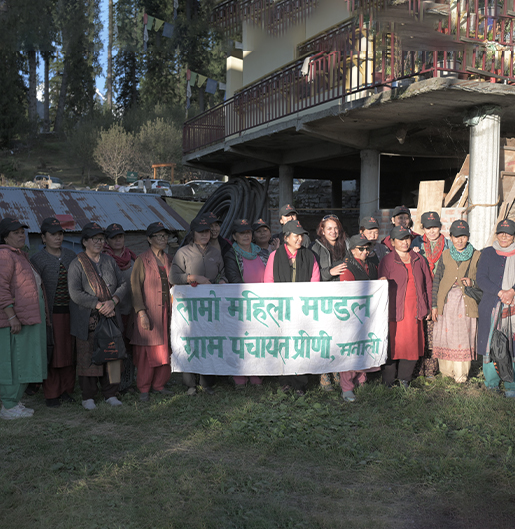
We empower mountain communities, especially women and youth, to turn waste into opportunity by creating climate-smart livelihoods across the circular economy. Through training and upskilling, we ensure that economic growth and environmental restoration advance together. More than 60 people have been employed directly through our initiatives, with 40+ currently working across various sites, while many more gain short-term or seasonal opportunities as projects expand—ensuring deep community participation.
Alongside livelihood creation, Healing Himalayas is evolving into a data-driven, innovation-led organization. By strengthening internal systems, advancing applied research, digitizing operations, and building strategic partnerships, we amplify our impact from the Himalayas to global platforms.
 Healing Himalayas